

19 May 2026
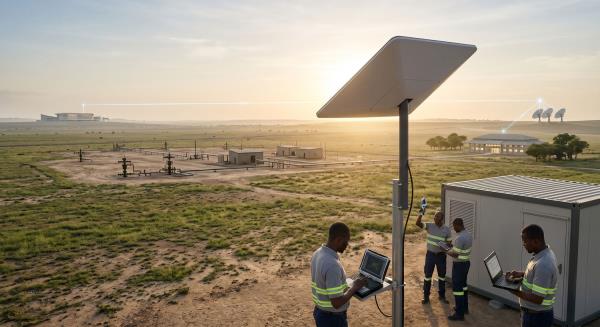
Set to scale both production and digital capacity across its Nigerian operations, Heirs Energies – a Lagos-headquartered indigenous energy company – has deployed Starlink-powered connectivity to transform asset management at remote oilfield sites.
The rollout is enabling real-time monitoring, reliant communications and advanced IoT integration, strengthening uptime, efficiency and data-driven field performance.
In the wake of its digital rollout, the company will participate as a Gold Sponsor at this year’s African Energy Week (AEW) 2026, set to take place from 12–16 October in Cape Town. Their sponsorship comes as the event launches its inaugural AI and Data Centre Track, positioning digital infrastructure, intelligent systems and data-driven demand at the centre of Africa’s evolving energy landscape.
12 May 2026

The Chief Regulatory Officer of Airtel Africa and Chair of GSMA Africa’s Policy Group, Mr Daddy Mukadi, has called on African governments to recognise telecommunications as a core economic pillar and to implement two specific tax reforms that could dramatically accelerate digital inclusion across the continent.
Speaking at the first edition of the États Généraux du Secteur des Postes et Télécommunications in Kinshasa, DRC – an event convened to support the development of a strategic roadmap for the country’s digital and telecommunications sector and attended by HE President Félix Tshisekedi – Mukadi, who’s also a member of the GSMA Global Policy Group, urged government and industry stakeholders to re-think the role of telecommunications in national development.
Find out more
12 May 2026
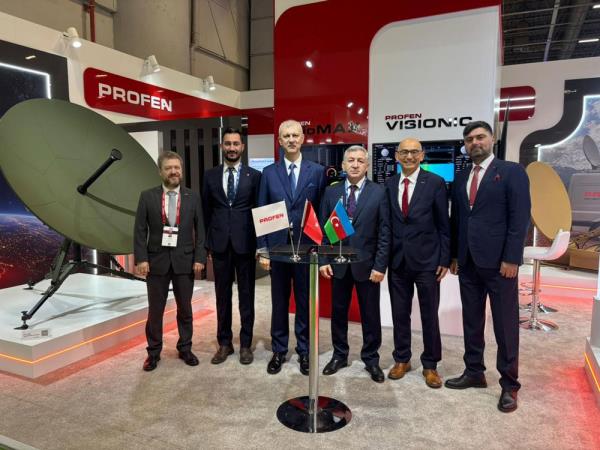
A cooperation agreement on satellite capacity utilisation has been signed between PROFEN, a Türkiye-based provider of satellite communication solutions, and Azercosmos, the national satellite operator of Azerbaijan, within the framework of SAHA Expo 2026 held in Istanbul.
Under the agreement, PROFEN plans to provide a range of fixed and mobile satellite communication services across the EMEA region, particularly in Türkiye, Europe, the Middle East and Africa through the utilisation of capacity on the Azerspace-1 and Azerspace-2 satellites.
Find out more12 May 2026

Paul Colmer, Executive Member of WAPA.
For years, satellite internet access technology was viewed as expensive, high-latency, and relevant only in niche scenarios. That perception is now obsolete.
This shift in thinking was strongly reinforced during a presentation by Dawie de Wet, Group CEO of Q-KON, at the Wireless Access Providers’ Association (WAPA) 20th Anniversary Conference held in Johannesburg in March, which drew a record 140 attendees and 24 sponsors.