19 May 2026
.jpg?lu=296)
Onecom, UK independent business communications technology specialist, has won three awards in the annual Vodafone Partner Awards – including Vodafone’s Strategic Partner of the Year accolade for the 16th consecutive year.
The award, Vodafone’s highest honour for business-to-business partners, is contested by all Vodafone Partners and rewards exceptional customer service, sales performance, and commercial success.
Find out more19 May 2026
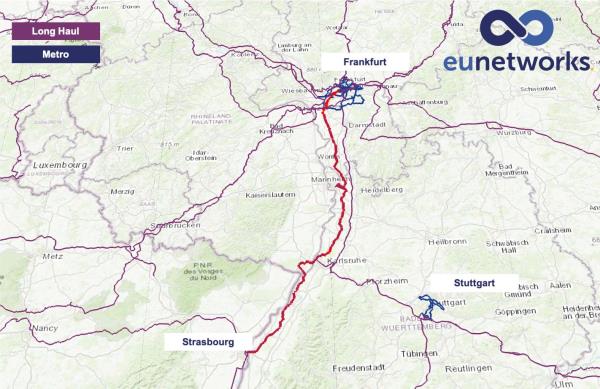
euNetworks has announced the delivery of its newest long-haul route, which spans between the key connectivity hubs of Frankfurt and Strasbourg.
The route is part of euNetworks’ state-of-the-art Super Highway fibre network, developed to address the increasing demand for AI and Cloud-ready connectivity infrastructure across the FLAP-D (Frankfurt, London, Amsterdam, Paris, Dublin) region.

19 May 2026
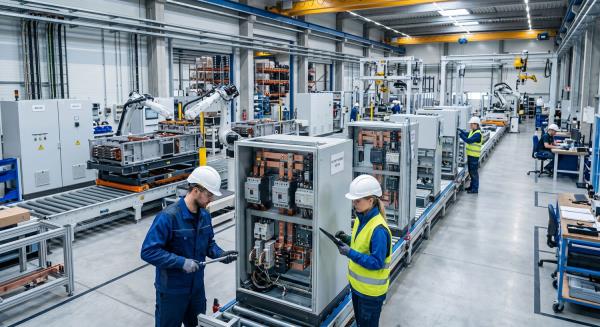
ABB is investing around $200 million in its medium-voltage manufacturing capabilities across Europe over the next three years to expand production capacity, accelerate the transition to next-generation technologies for power distribution and strengthen supply for customers modernising their power infrastructure. This includes utilities, industry, and rapidly growing data centre markets.
According to the International Energy Agency, electricity’s share of final energy consumption is expected to rise from around 20 percent today to nearly 30 percent by 2030, highlighting the urgency and scale of grid expansion.
Find out more19 May 2026
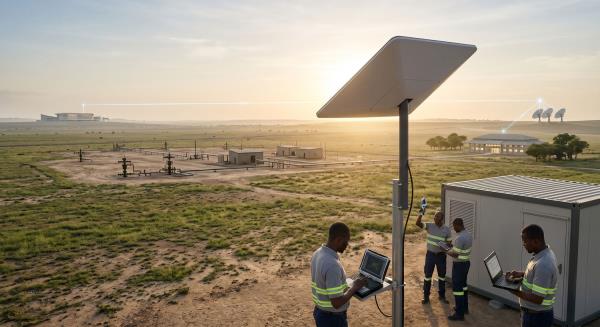
Set to scale both production and digital capacity across its Nigerian operations, Heirs Energies – a Lagos-headquartered indigenous energy company – has deployed Starlink-powered connectivity to transform asset management at remote oilfield sites.
The rollout is enabling real-time monitoring, reliant communications and advanced IoT integration, strengthening uptime, efficiency and data-driven field performance.
In the wake of its digital rollout, the company will participate as a Gold Sponsor at this year’s African Energy Week (AEW) 2026, set to take place from 12–16 October in Cape Town. Their sponsorship comes as the event launches its inaugural AI and Data Centre Track, positioning digital infrastructure, intelligent systems and data-driven demand at the centre of Africa’s evolving energy landscape.