

16 December 2025
In its push to become a cashless economy by 2024, the Government of Rwanda has made heavy investments in digital infrastructure, and mobile money swiftly became one of the nation’s go-to channels for transactions. During the COVID-19 pandemic, that shift was even more dramatic: mobile money transaction values soared, jumping from RWF 3 trillion in 2019 to RWF 10 trillion in 2021.
But then growth began to plateau. Despite what many believed was good overall network coverage, a closer look revealed a major barrier to reaching their digital-economy goals: poor connectivity, especially outside urban areas. In rural zones and small towns, network reliability and capacity issues were undermining efforts to drive widespread adoption of digital payments.
Recognising this as a systemic problem, regulators and policymakers under the Rwanda Utilities Regulatory Authority (RURA), the Rwanda Information Society Authority (RISA) and the Ministry of ICT & Innovation (MINICT) asked for deeper insight — not just anecdotes or regional averages, but data-driven evidence pinpointing where and why connectivity was failing.
To get beneath the surface, a data-driven investigation was launched in collaboration with consulting partner 71point4. Researchers began by combining insights from a qualitative survey among rural farmers and retailers (capturing real-life experiences of digital financial exclusion) with a deep analysis of telecom data supplied by RURA.
The data set included Call Detail Records (CDRs) — logging every call, data session and SMS on major operators’ networks during January and August 2020 — together with cell tower location information from 2021 and 2022. With these, analysts built metrics reflecting network load and coverage quality. Because the data didn’t directly indicate failed transactions or calls, the team instead inferred connectivity stress by examining the number of towers per administrative region (down to the local sector level) and measuring how many connections each tower handled during peak hours. Towers with high load — or regions with few towers — were flagged as high-risk for service degradation.
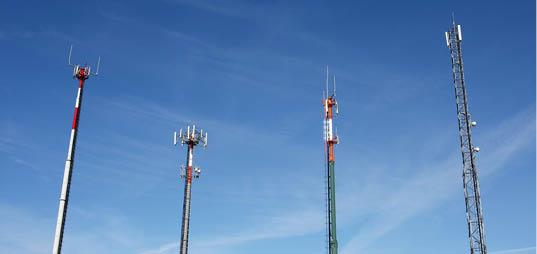
This method revealed stark disparities. For instance, in urban districts such as those around the capital, tower density was high — giving roughly one tower per 232 people. By contrast, in rural parts of the Eastern Province, some districts had as few as one tower per 1,300 people, and 42 entire sectors countrywide lacked a single telecom tower.
The data told a clear story: outside the main cities, infrastructure was stretched dangerously thin when demand peaked. Between January and August 2020 — a period coinciding with heightened mobile money use — the number of voice and data connections during peak hours rose by about 30%.
This increase meant that many towers, especially those in sparsely covered rural regions, were operating beyond comfortable capacity. Under such strain, the likelihood of failed or delayed transactions went up, which in turn discouraged users from relying on digital payments. The unreliability was not simply inconvenient — in some cases, money would be debited from a payer’s wallet even though the receiver never got it; in others, transactions would time out and fail.
Because existing Quality-of-Service (QoS) metrics tracked by regulators were measured at the provincial level, these local problems remained hidden behind averaged statistics. That meant many connectivity “black spots” went unaddressed, undermining efforts to expand digital finance across the whole population.
With the findings in hand, analysts shared their insights with RURA, RISA, MINICT and mobile network operators, helping to build a shared, data-driven understanding of where connectivity was failing and why.
The recommendations were twofold. First, regulators should adopt a new set of QoS metrics that reflect the user’s full experience — not just aggregated network statistics. Monitoring should drill down to cell-tower and even sector-level performance, rather than relying on broad averages. Second, the data underscored a need for infrastructure expansion: new towers should be built in underserved areas to achieve universal access and ensure sufficient capacity to support mobile money and other digital services.
The analysis triggered real action. The Government committed to deploying 100 new sites by end of 2023 and set a goal of achieving full network coverage within three years. MINICT convened a task team within RURA to specifically address connectivity gaps, highlighting 42 regions with limited or no tower coverage, and engaged mobile operators to close those gaps.
This case demonstrates how carefully analysed telecom data, when combined with real user feedback, can illuminate problems invisible to traditional oversight frameworks. By enabling granular, cell-level insight, the analysis made it possible to identify which communities were effectively cut off from reliable mobile connectivity. That in turn allowed policymakers to target infrastructure investment where it mattered most, rather than spreading limited resources evenly across regions regardless of need.
Moreover, the approach shifted power toward independent, evidence-based oversight. Rather than relying solely on reports from operators, regulators now have the tools to audit network performance themselves, boosting transparency and accountability. This kind of data-driven governance helps ensure that efforts to drive digital financial inclusion — or broader digital transformation — don’t leave behind rural or under-served areas.
Finally, by grounding policy decisions in real data rather than anecdotes or top-line averages, Rwanda made a stronger case to mobile operators, development partners and community stakeholders that infrastructure expansion was not just desirable, but essential for the country’s digital future. The ripple effect: more inclusion, more trust in digital payments, and stronger foundations for sustained economic growth.