
06 March 2026
Keysight Technologies has unveiled a new Wireless Coexistence Test Solution designed to help engineers efficiently validate wireless device performance amid increasingly congested RF environments. This automated, standards-aligned platform aims to streamline testing processes, improve repeatability, and enable earlier detection of interference issues—crucial steps as wireless devices expand across healthcare, consumer, and industrial sectors.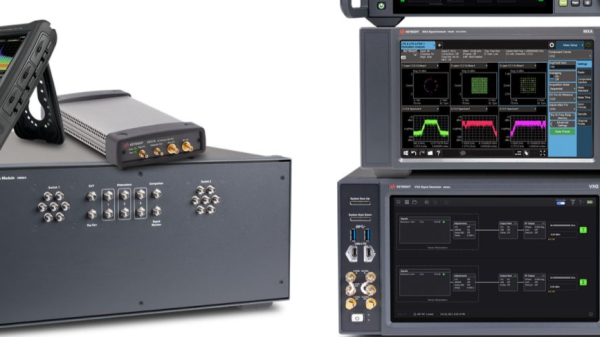
As the number of wireless-enabled products grows, engineers face mounting pressure to demonstrate reliable operation in the presence of RF interference. This is vital not only for meeting regulatory requirements but also for ensuring devices work effectively in real-world conditions. The new Keysight solution addresses this challenge by automating coexistence testing, reducing manual setup, and providing a robust framework for early risk identification during development phases.
In heavily regulated markets such as medical devices, wireless reliability is directly linked to patient safety and regulatory approval. The U.S. Food and Drug Administration recommends that manufacturers assess wireless coexistence risks, with guidelines referencing ANSI C63.27 as a recognized evaluation framework. However, manual testing against these standards is often time-consuming and complex. Keysight’s automated platform simplifies this process by delivering pre-compliance testing aligned with ANSI C63.27, helping teams identify interference issues sooner, cut down on rework, and better prepare for regulatory submissions.
The platform features a comprehensive library of nearly one hundred predefined test scenarios, spanning all three tiers of ANSI C63.27—from basic interference assessments to complex multi-signal environments. This enables engineers to perform thorough tests without building custom setups. To simulate real-world RF conditions, the solution incorporates a wideband vector signal generator capable of covering frequencies from 9 kHz to 8.5 GHz, scalable up to 110 GHz, with modulation bandwidths up to 250 MHz, expandable to 2.5 GHz. Its RF port supports up to eight virtual signals, allowing for realistic interference scenarios.
Built on OpenTAP, an open-source cross-platform test sequencer, the system offers a flexible, user-friendly graphical interface and open architecture. Engineers can upload custom waveforms, run offline simulations, and validate test plans with ease. The automation streamlines the entire testing process, reducing cycle times by over 50 percent and shifting the focus from manual setup to analyzing device behavior. These capabilities enable faster R&D cycles, improved compliance, and the development of safer, more reliable wireless products.
Beyond the hardware and software platform, Keysight provides consulting services to help teams define and track key performance indicators such as latency, throughput, jitter, and packet error rate (PER). These tailored insights assist manufacturers in optimizing device performance for specific use cases.
Han Sing Lim, Vice President and General Manager of Keysight’s General Electronic Measurement Division, emphasized the importance of wireless coexistence testing, stating, “It’s no longer optional—ensuring product safety, performance, and regulatory readiness depends on it. Our new Wireless Coexistence Test Solution allows engineers to automate ANSI C63.27-aligned testing, shorten development cycles, and gain early insights into device performance in real-world RF environments. It’s a smarter, faster path for R&D, supporting iterative testing across a variety of use cases and scenarios.”