15 December 2025
Standing on the outskirts of Nairobi, it’s not uncommon to see a teenager balancing a smartphone and a textbook, searching for an evasive and unreliable signal. This is the paradox of Africa today: a generation eager to plug into the global digital ecosystem, and an infrastructure network that too often leaves them buffering.
Yet something fundamental is shifting. Conversations once dominated by the logistics of fibre trenches and tower placement have turned upward: toward the sky, where networks ignore borders and where satellites glide silently over regions that have waited decades for reliable connectivity.
“Across Africa, the conversation about connectivity is changing from possibility to inevitability,” says Ayes Amewudah, Consulting VP Africa at Commercis Plc. “The continent stands on the edge of a digital revolution.”
The optimism surrounding new low Earth orbit (LEO) constellations is not the usual hype cycle. It feels different, maybe because for the first time, the technology aligns with the continent’s realities: widely dispersed populations, rugged terrain, and the soaring demand for affordable, high-performance communication.
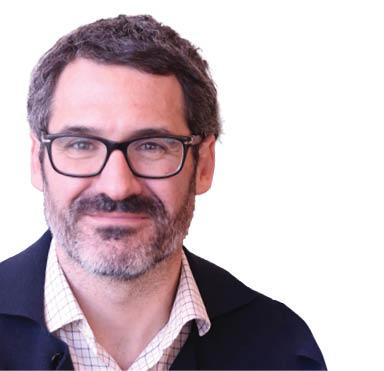
Pablo Catapodis,
SES
“LEO, MEO, and GEO satellites each offer unique strengths that make them essential to global connectivity,” asserts Pablo Catapodis, VP Sales Africa, SES. “LEO constellations provide low-latency links ideal for real-time applications, MEO satellites combine high throughput, low latency, and wide coverage for data-intensive use cases, and GEO satellites deliver unmatched global reach and reliability for data, broadcasting and critical communications. Together, they form the foundation of a versatile, truly global satellite ecosystem.”

Bob Potter,
Global Invacom
As Bob Potter, CTO of Global Invacom, frames it: “new NGSO constellations can deliver lower cost, low latency broadband to the African continent. Africans can benefit from services they may not have previously accessed — finance, education, health information, government services, the global marketplace.”
The revolution isn’t only technological. It’s human.
Africa’s landscape is extensive: vast deserts, dense forests, and mountain ranges that defy even the most ambitious engineers. For decades, these magnificent features have been the very things that held connectivity back.
“Africa has historically struggled to deliver broadband due to geography, topography and cost,” Potter notes. “Africa has historically struggled to deliver broadband services to its communities due to challenges such as geography and topography and cost of deployment to remote areas. Utilising the mega constellations means that Africans can benefit from broadband services which in turn enable the people to access services they may not have previously gained access to (finance, government information, education, health information, access to the global marketplace, etc).”
Entire nations have been shaped by the simple fact that reaching remote communities required digging trenches through regions where roads themselves are a luxury. With satellite, those barriers vanish.
“Satellite removes geographical boundaries,” says Helen Weedon, Managing Director of the Satcoms Innovation Group. “Mega constellations in LEO have the power to transform connectivity. For governments across Africa, this can have a massive impact on their universal service obligations (USOs) as they can help to connect rural and underserved areas at a lower cost. USOs aim to connect those communities that are disadvantaged due to lack of access to connectivity and therefore internet and phone services. The use of satellite removes geographical boundaries such as remoteness or terrain that prevents the rollout of copper or fibre cables or mobile phone masts in the area due to cost.”
Out in the field, the change is palpable. Engineers no longer speak about the impossibility of reaching certain regions. Instead, they speak in timelines: days, not months; weeks, not years.
“The beauty of LEO,” adds Stephen Tunnicliffe, Chief Strategy & Commercial Officer at Commercis Plc, “is that it can be deployed much faster — essentially wherever you can set up a terminal.”
Suddenly, the continent’s vastness feels like an advantage rather than an obstacle.
In rural Malawi, a teacher recently told visiting engineers that her students sometimes walk kilometres to find a reliable signal strong enough for a single online lesson. Stories like hers echo across the continent: stories of determination, resilience, and the frustration of knowing what’s possible but being unable to reach it.
“Connectivity transforms isolation into integration, and potential into productivity,” says Amewudah. “Mega constellations could unleash an untapped reservoir of skills, ideas, and entrepreneurship. By extending digital access to rural populations, mega constellations could unleash an untapped reservoir of skills, ideas, and entrepreneurship that could reshape local economies from the ground up.”
The most striking aspect of this shift is not the speed of the internet, but the speed of opportunity.
Weedon underscores this point with clarity: “satellite is inclusive. If affordable or subsidised, it can boost education, healthcare, business, finance — and level the playing field. It can transform communities and their ability to expand their reach in terms of trade, to develop their education systems, gain easier access to healthcare, take advantage of government services online, open bank accounts and a plethora of other benefits.”
The transformation happens quietly. A mother in a rural community gains access to telemedicine. A small business owner connects with suppliers abroad. Students join digital classrooms that no longer buffer into oblivion.

Yanniv Betito,
Telesat
“The value of a connected continent is well documented by organisations such as the United Nations, the World Bank, GSMA, the European Union and more, and is essential to elevating the African standard of living and competitiveness with developed nations,” explains Yanniv Betito, Vice President, Sales and Business Development, EMEA, Telesat. “In fact, a World Bank study revealed that every 10% increase in broadband penetration drives GDP growth by 1.38% in developing countries. Achieving this level of connectivity simply cannot be done with terrestrial networks that are limited by terrain, national borders and other constraints.”
Africa’s digital dreams have always collided with a familiar wall: cost. The expense of building fibre through remote areas has historically dwarfed the revenue those regions could generate. Investors, understandably, hesitated.
But LEO constellations are rewriting the balance sheet.
“While geostationary (GEO) satellite connectivity has been available for decades, the associated costs of accessing this small number of satellites made it prohibitive for wide scale use by African nations,” says Betito. “But new low Earth orbit (LEO) constellations, many of which include hundreds to thousands of satellites, deliver greater economies of scale resulting in a far lower cost per megabit of bandwidth. This creates an affordable price point for telecommunications providers to offer to African enterprises and individual end users.”
Unlike traditional infrastructure, which can be heavy, physical, and slow, LEO is agile. Once the satellite network is in place, the barriers to entry shrink dramatically.
Betito highlights another piece of the puzzle: “achieving these greater economies of scale requires satellite standardisation. For instance, standardisation enables replicability across multiple enterprise sites that may be located across different regions or even countries. Each location can use the same satellite antennas and other equipment, simplifying the user experience and avoiding high integration and network configuration costs. As an example, by adopting the MEF 3.0 Carrier Ethernet / Layer-2 service, the Telesat Lightspeed™ LEO constellation delivers seamless interconnection with the African fixed terrestrial networks, just like any other Carrier Ethernet extension a provider purchases.”
This standardisation simplifies everything from interoperability to network maintenance. It’s the difference between each country reinventing the wheel and the entire region moving forward cohesively.
Of course, innovation doesn’t erase reality. Africa’s terrain still challenges engineers; logistical hurdles still complicate deployment; regulatory processes still move at their own pace.
“Africa comes with real challenges. Reliable electricity remains a major constraint, especially in off-grid areas where powering user terminals and gateways is not guaranteed. Poor road infrastructure can complicate logistics, transporting equipment to remote sites becomes especially difficult during the rainy season, when many roads become impassable,” says Tunnicliffe. “Affordability is another key consideration. Although prices for satellite hardware are gradually falling, they remain out of reach for many households. Innovative business models, such as community access hubs, local cooperatives, or government-subsidised connectivity programs, could help overcome these barriers.”
Technical complexity also lingers. Weedon raises concerns about flat panel antennas (FPAs): “at present, FPAs are not subject to a standard testing and certification procedure that ensures minimum performance standards and prevents interference being caused with GEO networks. SIG and GSOA are currently working hard to heighten awareness of this issue and to tackle it by coming up with a testing and certification procedure that is agreed by satellite operators and can be used by satellite manufacturers to ensure that their antennas meet the minimum standards.”
Yet the industry is neither complacent nor unprepared. The rapid pace of innovation suggests that these challenges, while real, are surmountable. Indeed, the race to innovate is more than competitive: it’s collaborative, with the continent’s future connectivity hanging in the balance.
Walk into any telecom operator’s headquarters across Africa, and you’ll find a mix of excitement and caution. LEO isn’t just adding capacity; it’s redrawing entire business models.
“The rise of mega constellations will certainly disrupt Africa’s telecommunications ecosystem,” observes Amewudah. “There is debate about whether satellite internet will compete with or complement traditional telecom infrastructure investments in Africa. The most forward-looking operators see partnership, not competition. A hybrid model, where satellites handle remote and hard-to-reach areas, while fibre and 5G networks serve urban cores, could create a resilient, multilayered digital ecosystem. Such collaboration could optimise network costs, accelerate expansion, and ensure that no community is left behind. Ultimately, the question is not whether satellite and terrestrial systems can coexist, but how effectively they can converge to deliver universal connectivity.”
The old dichotomy — satellite vs. terrestrial — is dissolving. Hybrid networks are becoming the blueprint for Africa’s future. Fibre in cities, 5G in economic hubs, satellite in remote and rural zones.
“Mega constellations will provide more bandwidth, improving the overall quality of service by providing backup solutions for terrestrial networks or by extending coverage to areas where laying fibre is not economically or physically viable. However, because many mega constellations provide direct connectivity service to end users, they compete head-to-head with existing telecom providers,” says Betito. “Another key issue is overcoming network latency. African terrestrial connectivity routing often sends network traffic through Europe or the Americas before returning to Africa; this is slow and inefficient. Instead, LEO connections take the most direct path, increasing reliability and reducing latency, which is critical for applications like mobile payments.”
This is more than connectivity: it’s economic infrastructure.
Africa’s regulatory map has always been a mosaic. A patchwork of policies, priorities and processes, each tied to its own history and political context.
“Regulation in Africa is very different to other world regions,” explains Weedon. “It is not straightforward and there is no blanket regulation, so it’s difficult to navigate. Access to spectrum can also be a challenge but this is gradually changing. Limited infrastructure can also create barriers.”
Potter echoes the complexity: “regulation is very fragmented, with each country with a different set of regulation. There is currently no consistent framework in place in terms of satellite regulation so this needs to be taken on a country-by-country basis.”
Yet harmonisation is slowly emerging. As governments see the economic potential, regulatory clarity becomes a competitive advantage.
Environmental sustainability has also become firmly part of the conversation. Betito emphasises the growing global responsibility: “all satellite operators are required to comply with several international rules and treaties developed by the United Nations and other cooperative organisations, along with regulations from the International Telecommunication Union (ITU). These policies cover a range of issues such as collision avoidance and space debris mitigation, fair radio frequency spectrum utilisation, and safe, sustainable use of space. There is also growing international consensus around the need to mitigate light and radio pollution from satellites that can interfere with terrestrial activities like astronomy.”
In a continent deeply affected by climate change, the alignment of connectivity with green energy — particularly solar-powered terminals and gateways — creates a rare moment where technological progress and climate stewardship coexist.
In townships, markets, tech hubs, and rural villages, connectivity is increasingly viewed as a necessity, not a luxury. And the benefits extend far beyond convenience.
“The ultimate promise of mega satellite constellations extends far beyond internet access; it is about accelerating Africa’s social and economic transformation,”
Amewudah says. “Reliable connectivity enables digital education platforms that reach every child, telemedicine programs that serve every community, and e-commerce ecosystems that empower entrepreneurs to trade globally. It allows farmers to access agricultural data, young professionals to work remotely for international companies, and governments to digitise public services efficiently.”
“As industries evolve and connectivity demands grow more complex, multi-orbit solutions will remain central to delivering reliable, adaptive, and future-proof satellite communications across Africa and around the world,” says Catapodis. “Already, more customers from across the continent come to count on the broad reliability profile of multi-orbit solutions.”
Connectivity becomes a foundation for inclusive growth, it breaks down geographic barriers, promotes innovation, and ensures that opportunity is not confined to cities.
“Given that so much of the African continent is still underserved or not served at all, mega constellations can have a transformative effect on the economic development and digital inclusion across Africa,” adds Weedon. “Satellite provides the most inclusive technology that ensures that every community can gain access to connectivity no matter where they are from the nearest town or city.”
According to Potter, Africa has the lowest internet penetration at just 39%. Access to broadband can transform this.
Betito describes the broader societal shift: “increased access to satellite connectivity has the potential to make a huge difference to Africa’s economic development and digital inclusion. It opens doors to critical services such as healthcare, education, financial and agricultural management, and creates potential for businesses to expand and flourish. It is the continent with the lowest internet penetration at just 39% and its people struggle with poverty. Access to broadband and therefore the internet can transform this, and mega constellations provide the ideal connectivity medium.”
In countries where entire generations have grown up just outside the reach of the digital world, this shift is not merely technological: it is liberating.