15 December 2025
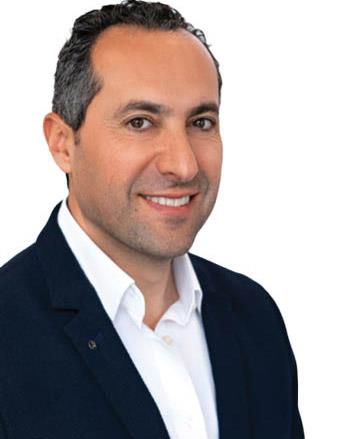
Yanniv Betito, Telesat’s RVP of
Business Development for EMEA
Africa’s connectivity challenge remains vast and varied. Where do you see the largest gaps and which of those can satellite technology realistically address first?
Infrastructure remains the greatest challenge across Africa, although regulation and affordability also add significant complexity. Satellite connectivity can directly strengthen infrastructure by improving reliability, interconnecting countries and gateways, and providing both primary and backup links that accelerate development.
Affordability is also improving as satellite capacity costs continue to fall. What used to be viable only for highly remote areas is now increasingly affordable for broader use cases, helping close the digital gap.
Regulation is evolving alongside technological progress. It remains a challenge, but one that we actively manage. We’ve worked with regulators and governments across Africa for more than 50 years, and our experience ensures we can continue aligning satellite operations with national digital priorities.
LEO satellites promise to “democratise connectivity.” What does that really mean on the ground in Africa — for a student in a remote village or a health clinic far from the grid?
It’s important to distinguish between consumer and enterprise use cases.
On the consumer side, satellite is a powerful way to connect people in areas where terrestrial networks can’t reach. Companies like Starlink have demonstrated this potential, though in some regions, mobile connectivity remains more suitable and cost-effective.
For enterprises, requirements are different. Businesses and institutions often need very specific performance levels — low latency, high reliability, committed information rates and strong service level agreements (SLAs) — which is where we focus. For example, in telemedicine, where lives depend on stable, high-quality connections, enterprise-class LEO satellites deliver the reliability and responsiveness needed.
Affordability for individuals and small organisations remains a challenge, but costs are coming down. Satellite can also serve as a backhaul for local terrestrial or community Wi-Fi networks, extending access to villages that fibre and mobile haven’t yet reached. This model allows shared access at comparable prices, making it more attainable for rural communities.
Many African countries are heavily investing in fibre and 5G backhaul infrastructure. How do you see satellites working with these investments rather than against them?
We see satellite as a complementary technology that helps terrestrial operators accelerate their rollout. It enables them to start serving new areas immediately — even before investing in fibre or tower infrastructure — and to generate revenue while planning longer-term deployments. Once terrestrial links are in place, the satellite connection can either remain as a backup or be redeployed elsewhere.
Satellites also provide valuable resiliency. Fibre cuts and terrestrial outages are common, and having satellite backup ensures critical services, such as mobile financial transactions, remain online. You don’t need to back up an entire fibre network — just the essential traffic. That reliability is vital for economic activity and user trust, and it strengthens Africa’s overall digital transformation.
Affordability is a recurring barrier. What business model or financing innovations can make satellite internet sustainable for low-income users or small ISPs across Africa?
Our model is to provide satellite infrastructure at costs comparable to terrestrial networks, enabling local service providers to build affordable plans that fit their markets. Operators can use satellite backhaul to extend mobile or Wi-Fi networks, tailoring pricing and contention levels to local conditions.
For example, community Wi-Fi can bring access to small villages for as little as $1–2 per month. We’ve operated within this framework for decades, working closely with regulators, local ISPs, and national telcos to ensure our solutions strengthen — not disrupt — local ecosystems.
Our approach is about partnership: creating win-win models that make satellite viable while supporting national digital goals. We don’t aim to replace terrestrial operators or go directly to consumers, but to complement existing players and make connectivity sustainable across income levels.
With mobile towers expanding and terrestrial options often cheaper, is that a potential barrier to satellite adoption?
Not necessarily. We don’t see satellite as competing with terrestrial networks but as enabling them. Telcos are expanding aggressively — Airtel Africa and Helios Towers, for example — and satellite can backhaul these new sites efficiently, making it feasible to reach more remote regions.
Where fibre and terrestrial infrastructure make economic sense, they’ll continue to grow. Satellite simply fills the gaps where those investments aren’t viable, helping operators extend coverage faster and more cost-effectively than waiting for ground infrastructure.
Looking ahead to 2030, what does a “connected Africa” look like in your vision — and what are the biggest risks that could derail achieving that vision?
Our immediate focus is near-term execution. We’ll launch our first satellites in 2026 and commence global services by the end of 2027. By 2030, we expect every country to benefit from scalable, reliable satellite infrastructure that supports ongoing digital transformation.
We view challenges such as regulation, affordability, and deployment logistics as areas for collaboration, not barriers. Our goal is to work with governments, telcos, and local partners to ensure that as demand grows, we can rapidly scale capacity, add local hubs, and support each country’s connectivity priorities.
Beyond broadband access, where will satellite connectivity have the biggest impact — in education, fintech, healthcare, or agriculture — and which will move fastest?
All of these sectors will benefit, but those with the highest performance requirements — such as healthcare and fintech — will likely lead adoption. These industries
demand low latency, high SLAs, and always-on connectivity, all of which LEO satellites provide.
That said, education and agriculture will also see significant gains as connectivity expands. Our technology is designed to integrate seamlessly with existing networks, delivering terrestrial-grade performance through the sky. Over time, as affordability improves and awareness grows, adoption will spread across all sectors.
What are the key priorities you want Telesat to bring to the Africa Tech Festival table, and what do you hope to accomplish while you’re here?
Our priority this year is execution. In previous years, our goal was to introduce our technology and demonstrate its potential. Now, the market recognises our reliability and service quality, and conversations have shifted to implementation.
Partners are coming to us asking, “How can we collaborate?” That’s exactly where we want to be. We’re now focused on finalising the commercial, technical, and regulatory models that will make LEO connectivity operational by the end of 2027 — and, ultimately, help accelerate Africa’s digital transformation.