

01 April 2026
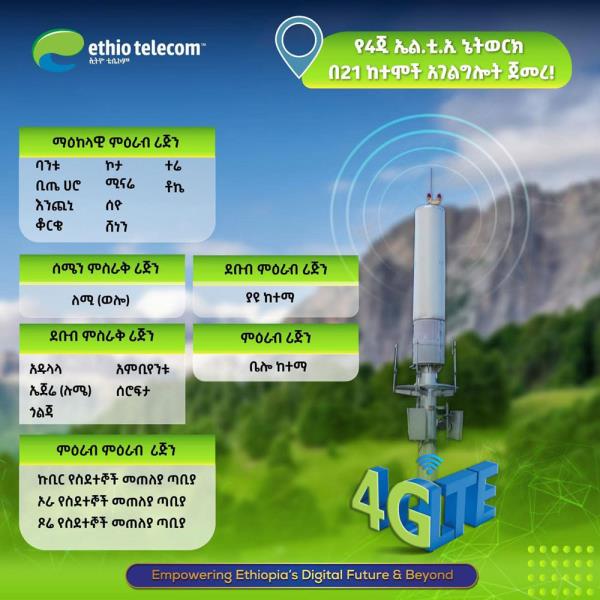
Ethio Telecom has expanded its 4G LTE mobile network to 21 additional cities across Ethiopia, extending high-speed mobile broadband access to a wider range of urban centres.
The rollout introduces enhanced mobile data capabilities in a mix of regional and developing cities, reflecting continued efforts to broaden network coverage beyond the country’s primary metropolitan areas. The expansion strengthens access to faster mobile internet services, supporting growing demand for data connectivity across both consumer and business segments.
Find out more13 February 2026
The Democratic Republic of Congo has stepped up plans to enforce long-ignored ownership laws in its $2 billion telecom sector that compel major foreign-backed operators to allocate 5% equity to local workers.
As part of a wider drive to localise economic gains, President Felix Tshisekedi ordered regulators to strictly carry out the directive that could materially alter how major operators structure their businesses in the country. Telecom turnover rose nearly 9% to over $2 billion in 2024, underscoring the sector's economic weight.
Find out more
11 February 2026

The Ministry of Communications and Information Technology (MCIT) in Egypt has signed the country’s largest spectrum allocation deal in its 30-year mobile history.
Valued at nearly $3.5 billion, the agreements grant local mobile network operators (MNOs) an additional 410 MHz of spectrum — equivalent to the total spectrum allocated over the past three decades.
Find out more03 February 2026

ZTE announced its active involvement in the "5G Vertical Industry Summit" held in Algiers on January 28, 2026. Organized by Ooredoo Algeria, the event comes amid ongoing preparations for the introduction of 5G technology to the Algerian market.
As a key partner in the development of Algeria’s telecom infrastructure, ZTE works closely with Ooredoo to advance the nation’s 5G evolution. Its participation in the summit underscores this ongoing collaboration, with the company providing technical support for demonstrations that showcased the capabilities of 5G networks.
Find out more