
16 January 2026
A recent report by Dubai World Trade Centre (DWTC), the organizer behind GITEX, highlights Africa’s accelerating push to establish a competitive digital economy, with data centers emerging as a critical pillar of the continent’s long-term technological development.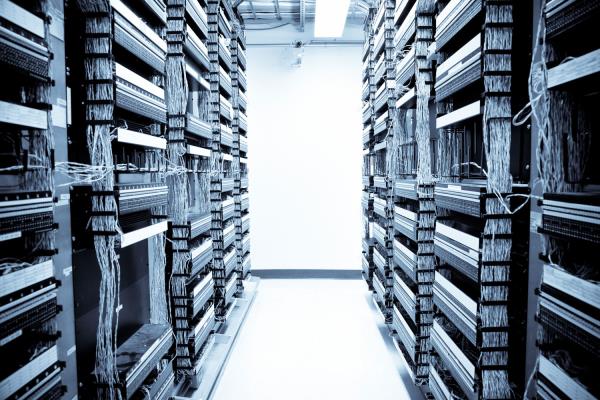
As governments and private operators expand infrastructure to meet surging demand for cloud computing, artificial intelligence, and digital financial services, data centers are becoming vital for housing the processing power and storage necessary for a thriving digital ecosystem.
The study underscores a significant growth trajectory for Africa’s data center sector, which is projected to expand from $3.49 billion in 2024 to $6.81 billion by 2030, at an annual growth rate of nearly 12%. This expansion is closely linked to the continent’s burgeoning AI market, valued at $4.51 billion in 2025 and expected to surpass $16.5 billion by 2030. Industry experts emphasize that reliable data center capacity is indispensable for scaling AI systems, transforming infrastructure development from a strategic goal into a practical necessity.
However, progress faces persistent challenges rooted in outdated infrastructure. Transmission infrastructure remains a major obstacle, with aging transmission lines and unstable electrical grids limiting consistent power delivery to large facilities, according to Dr. Krishnan Ranganath, Regional Executive for West Africa at Africa Data Centres. Connectivity issues, including high bandwidth costs and limited terrestrial fiber networks, further hinder data center performance and economic value, he added.
Ranganath advocates for fundamental investments in power and connectivity to enable Africa’s infrastructure to mature over the next five to ten years, aiming for a more integrated continental digital market. Yet, regulatory fragmentation complicates efforts, as differing laws on data localization, sovereignty, and standards across countries increase operational costs and restrict cross-border data flow. These regulatory inconsistencies slow deployment and deter investment, limiting the continent’s ability to operate as a unified digital economy.
Despite the hurdles, many African nations—including Morocco, Kenya, Egypt, Nigeria, and South Africa—are actively developing national digital roadmaps and attracting international cloud and tech providers. Industry forecasts project Africa’s cloud computing market to reach $45 billion by 2031, with fintech expected to grow to $65 billion by 2030, signaling robust future growth.
In Morocco, the government launched the Maroc IA 2030 initiative during a recent event in Rabat, aligning with the country’s broader digital sovereignty and skills development goals. The program, branded “AI Made in Morocco,” builds on the July 2025 National Artificial Intelligence Conference, establishing a framework focused on research, applied AI, and a network of AI centers known as Jazari Institutes.
Industry leaders emphasize that Africa’s digital economy, projected to reach $1.5 trillion by 2030, will depend less on isolated projects and more on coordinated investments in infrastructure, regulation, and regional cooperation. Efforts in data centers, cloud services, fintech, and AI are central to this vision.
DWTC’s findings come as GITEX Africa prepares for its 2026 edition in Marrakech from April 7 to 9. The event will expand its program to include dedicated showcases for data centers, recognizing their rapid rise as one of the fastest-growing segments in Africa’s technology scene. Organizers position the sector alongside other high-growth fields such as fintech, future mobility, and sports tech, underscoring its strategic importance in shaping the continent’s digital future.