10 December 2025

Ivo Ivanov,
CEO, DE-CIX
It’s the global leader in mobile money, accounting for 65% of the world’s $1.1 trillion worth of transactions, with services like M-Pesa thriving in areas like Kenya and Tanzania. Tools like Digital Green are providing farmers in Ethiopia with climate and soil data for improved crop planning. And platforms such as Hello Doctor and mPharma are revolutionizing telehealth in countries like Nigeria and beyond.
Yet, despite the rapid growth of Africa’s digital economy, a significant portion of the continent still remains offline. According to the International Telecommunication Union (ITU), only around 37% of the population in Africa have reliable internet access, almost half the global average. That leaves hundreds of millions without access to these pioneering digital services – as ever, the bottleneck is not innovation, but connectivity. The digital divide used to be a matter of inconvenience, but now it’s a question of economic opportunity, social participation, and national resilience.
Satellites – particularly the new generation of low Earth orbit (LEO) constellations – are emerging as one of the most promising ways to close this divide. Unlike terrestrial fiber or mobile networks, which require extensive infrastructure buildouts, satellites can deliver coverage to deserts, rainforests, islands, and remote communities with equal ease. They can complement undersea cables and terrestrial backbones, ensuring that connectivity is not limited to major urban centers. For Africa, where vast distances and limited infrastructure have historically slowed progress toward universal access, the ability to beam high-speed, low-latency internet directly from the skies represents a transformative leap forward. We’ve mastered getting satellites into orbit – the question now is how quickly these satellites can be used to secure Africa’s digital future, and how quickly – and intelligently – they can be integrated into the continent’s broader connectivity ecosystem.
Africa’s space ambitions are already reshaping the continent’s digital trajectory. More than 21 African nations now operate space programs, with at least 65 satellites in orbit serving everything from Earth observation to communications. Leaders such as Nigeria, South Africa, Egypt, Algeria, and Morocco have steadily expanded their fleets, while emerging players like Ghana and Tunisia have shown what’s possible with homegrown innovation. Ghana’s first satellite, GhanaSat-1, was built and launched by university students in partnership with the Kyushu Institute of Technology in Japan, while Tunisia’s Challenge-1 marked the country’s first domestically manufactured satellite. These milestones demonstrate that space is not merely the preserve of the world’s largest economies – it is becoming a field where all nations can contribute directly to solving their own challenges.
But this isn’t about prestige. Across the continent, Earth observation missions are helping farmers track rainfall patterns, manage crop yields, and adapt to shifting climates. Governments are leveraging satellite imagery to monitor deforestation, track urban growth, and respond to natural disasters. In countries vulnerable to drought and flooding, satellites provide early-warning systems that can save lives and livelihoods. These technologies are also providing the groundwork for greater digital inclusion, enabling previously underserved regions to connect into the global economy. With Africa’s population projected to double by 2050, the ability to harness space for smarter agriculture, climate resilience, and connectivity is essential for sustainable growth.
Whatever ambitions propel humanity beyond the stratosphere, everything depends on connectivity. And these days, connectivity is measured not just in coverage, but in latency: the fraction of a second it takes for information to make a round trip across the network. Naturally, this is a difficult thing to overcome with satellites and terrestrial nodes being so far apart. Low latency is the difference between a smooth video call and a broken one, between a reliable cloud application and a frustrating delay. By orbiting just a few hundred kilometers above the planet, rather than 36,000km like their geostationary (GEO) counterparts, low Earth orbit (LEO) satellites can reduce transmission times from 400–700ms down to 20–50ms. But is that good enough?
Fiber connections, particularly those that use local Internet Exchanges (IXs), can achieve transmission times of 1-5ms for a round trip, so while 20-50ms might sound impressive, it’s not yet on a par with fiber-based connectivity. We cannot bring satellites any closer, so instead we need to look at optimizing how data traffic is managed between orbit and Earth. This is the focus of the European Space Agency’s OFELIAS project, which is developing new protocols, algorithms, and procedures to intelligently control network utilization and overcome the limitations of today’s systems. Unlike traditional radio links, OFELIAS is experimenting with laser-based communications, capable of far higher bandwidths and faster information flows. The real challenge is that optical transmissions are more susceptible to atmospheric disturbances – fog, clouds, and rain can slow or disrupt signals. By 2026, OFELIAS aims to deliver a blueprint for how next-generation satellite networks can mitigate these effects and bring truly resilient, high-performance connectivity to Earth – and areas like Africa where universal terrestrial connectivity remains costly and impractical, will stand to gain the most.
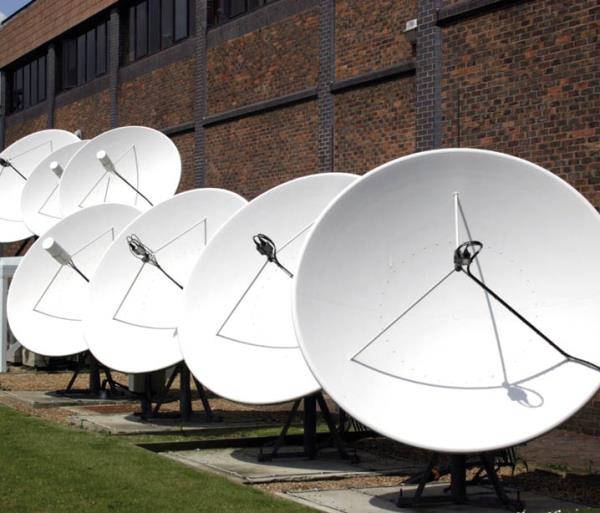
The bottom line is that tomorrow’s satellite ecosystems will need to behave much more like the terrestrial Internet: traffic exchanged at neutral meet-points, smart routing across multiple operators, and automatic failover when any single path degrades. That means interconnection – in orbit and on the ground – will become a key design principle. As LEO constellations scale, the bottleneck will be how efficiently traffic is handed off between satellites, ground stations, cloud edges, and national networks so users experience consistent low-latency and reliability across borders. Africa has a head start on this logic from its terrestrial Internet journey. A 2024 study by the Coalition for Digital Africa reports that the number of operational IXs in Africa had grown from 36 in 26 countries in 2016 to 63 in 38 countries by 2023. Today, there are a total of 68 IXs in Africa connecting a minimum of three independent networks. Building and using these IXs has already shown how local traffic exchange lowers costs and improves performance – an approach the region can eventually extend to space-enabled connectivity as satellite traffic grows.
This global staging is important because connectivity is ultimately a collaborative pursuit, and it’s how the region will eventually unlock cross-border applications that demand predictable performance in key areas like telemedicine, fintech, remote learning, and cloud workloads. Policy momentum is lining up: the African Telecommunications Union highlights the role of satellites in health, education, agriculture, and disaster response, while Europe’s Africa-EU Space Partnership Program explicitly seeks Africa-Europe partnerships on digital connectivity infrastructure, creating the right conditions to co-develop interconnection models and shared standards.
Taken together, these steps sketch a near-term pathway: regional satellite-to-ground interconnection hubs, weather-aware optical routing, and common peering frameworks that let African networks exchange space-borne traffic locally and efficiently, just as they do today on land – but with much greater potential coverage.