
31 December 2025

Africa’s wild places are under increasing pressure. Expanding human populations, organised wildlife crime syndicates, climate change and shrinking natural habitats all pose escalating risks to biodiversity. For conservationists, park rangers and local communities, technology has become an indispensable ally. From real-time monitoring of endangered species to coordinating ranger patrols across rugged landscapes, secure wireless communications now sit at the heart of modern conservation.
Yet with opportunity comes vulnerability. The very data and systems designed to protect wildlife can be exploited by adversaries if they are not built on secure, resilient foundations. A leaked GPS coordinate can place a rhino at risk. An intercepted ranger transmission can reveal patrol patterns. A compromised network can delay response teams when minutes matter most.
At OmniComs Africa, we have witnessed these challenges first-hand. Our mission is to ensure that conservationists across the continent have access to trusted, secure communications, built on advanced digital radio and integrated network solutions.
Conservation networks are unlike commercial or urban communication systems. They must operate in remote, unforgiving environments where infrastructure is scarce, power supply is unreliable and the stakes are uniquely high. In this context, security takes on several dimensions.
Confidentiality of sensitive data: Endangered species locations are highly sensitive intelligence. If intercepted, they could be exploited by poachers. Strong encryption and access control are essential.
Integrity of communications: Every data point - whether from a fence sensor, drone feed, or ranger patrol - must be authentic and untampered. Spoofed or manipulated data could divert patrols or mask illegal activity.
Availability and reliability: Communications in the field cannot drop when they are needed most. Networks must provide continuous coverage, redundancy and resilience to environmental damage or sabotage.
Physical security: Radios, repeaters, and sensors themselves can be tampered with, stolen, or destroyed. Hardware must be rugged, tamper-resistant and backed by contingency plans.
Our work focuses on delivering solutions that provide secure voice and data transmission, encrypted GPS tracking and robust field-ready hardware, ensuring that field teams can operate safely and effectively.
Several international projects illustrate how secure digital networks are transforming conservation work:
1. Kruger National Park, South Africa
Kruger is one of the largest national parks in Africa and one of the hardest hit by rhino poaching. A wide-area digital radio system provides secure coverage across vast swathes of the park. Encrypted voice ensures patrol communications remain confidential, while GPS-enabled radios give commanders visibility of ranger movements in real time. The result is faster, safer and more coordinated responses to incidents.
2. Kenya Wildlife Service (KWS)
In Kenya, an integrated digital network covers multiple reserves under the stewardship of the Kenya Wildlife Service. Rangers now operate with secure voice, encrypted data and GPS tracking, all managed through a centralised dispatch system. This has transformed patrol coordination, reducing response times and improving safety in some of the most challenging terrain on the continent.
3. Kaziranga National Park, India
Kaziranga is a UNESCO World Heritage Site home to the world’s largest population of one-horned rhinoceroses. A multi-site digital network covering over 1000 km² links ranger stations, guard posts and field patrols, with encrypted GPS data ensuring patrol routes remain confidential and coordinated.
4. Mount Kenya UNESCO Biosphere Reserve
A deployment in East Africa involved providing secure digital communications for rangers working across remote mountainous terrain. Solar-powered repeaters ensured continuous operation in off-grid environments, while rugged radios with long battery life could withstand extreme conditions and rough handling.
These examples demonstrate that secure wireless communications are not just a technical convenience - they are a critical tool in protecting biodiversity.
Whether deploying a single repeater in a conservancy or a multi-site digital trunked network spanning Transfrontier Parks, successful conservation communication networks share several core characteristics.
For end-to-end security, encryption, authentication, and secure key management ensure that sensitive communications remain confidential and trustworthy. To ensure field resilience, equipment must withstand heat, dust, rain and rough handling. Solar or battery-powered options keep systems running off-grid. Integration capabilities are also key, requiring a unified operational ecosystem for link radios with IoT sensors, drones, camera traps, and satellite links. Moreover, networks should grow with the conservation mission, covering new areas as parks expand or trans-frontier initiatives require cross-border coordination. Finally, to support full operational intelligence, advanced dispatch platforms provide real-time mapping, incident logging, and ranger tracking, giving commanders the situational awareness needed to act decisively.
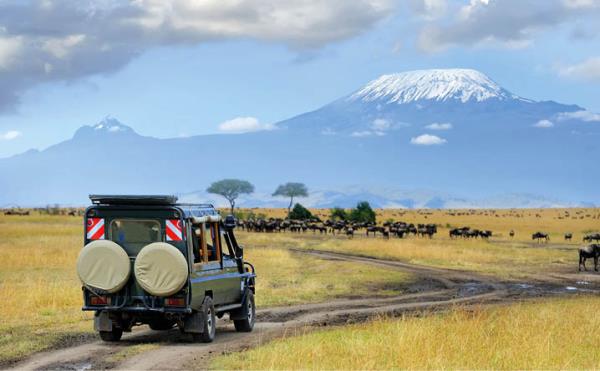
While global case studies provide proof of concept, Africa presents unique challenges and opportunities.
Vast, remote landscapes require wide-area coverage solutions that traditional cellular networks cannot deliver. Meanwhile, cross-border parks, such as KAZA (Kavango-Zambezi Transfrontier Conservation Area), demand scalable, interoperable systems that can operate across jurisdictions. Moreover, community engagement is essential: conservation areas often overlap with local villages, meaning communications must extend to community scouts and first responders. Additionally, resource constraints require solutions that are cost-effective to deploy and maintain without compromising security or performance.
Looking ahead, conservation communications will become even more integrated and data-driven, with IoT sensors detecting fence breaches, gunshot or vehicle movements will feed data directly into secure radio backbones. AI analytics will flag suspicious patterns, such as unusual ranger patrol gaps or clustering of poaching activity. Satellite backhaul will connect even the most remote ranger stations to command centres, ensuring continent-wide visibility. Body-worn cameras integrated with radios will provide live situational awareness to control rooms, secured end-to-end.
As these systems grow, so too does the risk of cyber-attack or misuse. That is why security by design must remain at the forefront. By combining digital radio technology with expert network design and local operational knowledge, Africa’s conservation organisations can ensure that communications remain both innovative and trustworthy.
From our experience deploying networks in Southern Africa, several lessons have emerged:
Design networks around the user, not the technology: Rangers need equipment that is simple to operate under stressful conditions. Complexity in the field can undermine security.
Train and empower local teams: Technology is only as effective as the people operating it. Field teams and community scouts need training on encryption, device handling and secure operational procedures.
Plan for environmental resilience: Solar-powered repeaters, ruggedised radios and waterproof enclosures are not optional - they are mission-critical.
Prioritise data governance: Conservation organisations must make careful decisions about what data is shared publicly, what is restricted and how long sensitive location data is retained.
Integrate monitoring and response: Systems must feed actionable intelligence into operational centres capable of rapid, coordinated action. Delays in response undermine the purpose of any network.
Africa’s biodiversity is a global treasure, but protecting it requires more than good intentions. Rangers, conservationists and community scouts cannot operate effectively without secure, reliable communications.
Through strategic deployment of digital radio networks, IoT integration and locally supported operational systems, we can ensure that conservation teams can focus on what matters most: protecting wildlife and natural habitats.
Connectivity is not enough. Security, reliability and resilience are non-negotiable. Only by connecting the wild securely can we give Africa’s wildlife the protection it deserves - today, tomorrow and for generations to come.